


Every minute counts when it comes to a brain haemorrhage. One of the most dangerous medical emergencies a person can face, a brain bleed can strike suddenly, leaving little time for hesitation.
Yet many people don't recognise the brain bleed symptoms until it's too late. Terms like "ICH," "brain bleed," or "intracranial haemorrhage" can feel confusing and overwhelming for patients and families alike.
At Aditya Hospital, Rewari, we believe awareness saves lives. This guide breaks down everything you need to know about a brain haemorrhage, how to spot the symptoms, what surgery involves, and how long recovery takes.
Because when it comes to your brain, every second matters.
What Is a Brain Haemorrhage?
Simply put, it is bleeding that occurs inside or around the brain when a blood vessel ruptures. The leaked blood builds up pressure, damaging surrounding brain tissue and disrupting normal function.
ICH — The Medical Term Explained
In medical terminology, this is known as ICH (Intracerebral Haemorrhage) or "ICH in brain" referring specifically to bleeding within the brain tissue itself. It is classified as a hemorrhagic stroke, distinct from an ischemic stroke caused by a blocked artery.
Why Is It Dangerous?
- A blood leak in the brain creates dangerous pressure
- Brain cells begin dying within minutes
- It can cause permanent disability or death if untreated
A brain haemorrhage is always a medical emergency requiring immediate neurosurgery intervention; every second counts.
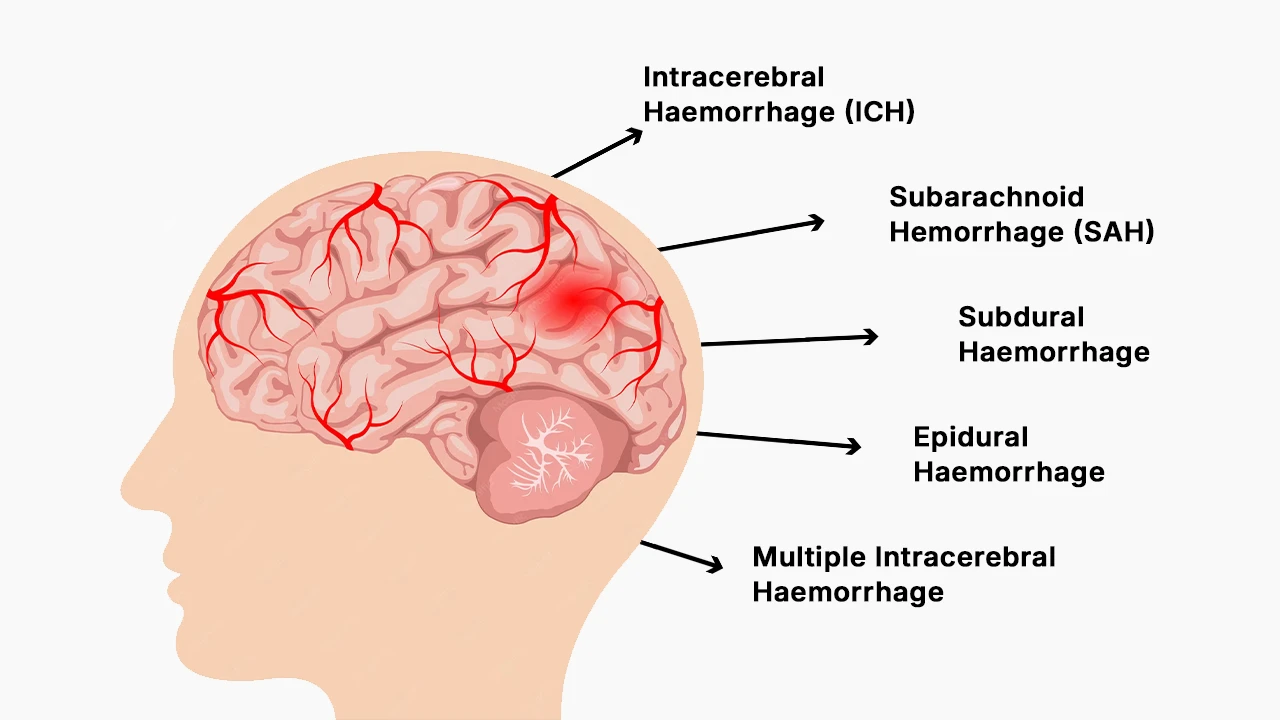
Types of Haemorrhage
Understanding the types of haemorrhage helps doctors choose the right treatment quickly.
1. Intracerebral Haemorrhage (ICH)
The most common type of bleeding occurs directly within the brain tissue. This is what most people mean by the ICH medical term.
2. Subarachnoid Hemorrhage (SAH)
Bleeding in the space between the brain and its surrounding membrane is often caused by a ruptured aneurysm.
3. Subdural Haemorrhage
Blood collects between the brain and its protective covering (dura). Common after head injuries.
4. Epidural Haemorrhage
Bleeding between the skull and the outer brain lining is often linked to trauma.
5. Multiple Intracerebral Haemorrhage
A more severe condition where multiple intracerebral haemorrhages occur simultaneously, often seen in patients with severe hypertension or blood disorders.
Brain Haemorrhage Causes
A brain haemorrhage can happen to anyone, but certain conditions significantly raise the risk.
Common Brain Haemorrhage Causes
- High blood pressure: The leading cause. Brain haemorrhage due to high blood pressure occurs when chronically elevated pressure weakens and eventually ruptures blood vessel walls
- Head trauma or injury: Falls, accidents, or sports injuries can trigger sudden bleeding
- Ruptured aneurysm: A bulging, weakened blood vessel that bursts without warning
- Arteriovenous Malformation (AVM): Abnormal tangles of blood vessels that can rupture
- Blood thinners: Medications like warfarin increase bleeding risk significantly
- Bleeding disorders: Conditions like haemophilia affect the blood's ability to clot
- Excessive alcohol or drug use: Weakens blood vessels over time
Who Is Most at Risk?
- Adults over 55
- Uncontrolled hypertension patients
- Smokers and heavy drinkers
- Those with a family history of stroke
Brain Bleed Symptoms & Brain Haemorrhage Symptoms
Recognising brain bleed symptoms early can be the difference between life and death. Symptoms vary depending on the location and severity of the bleed, but some warning signs are universal.
Common Brain Haemorrhage Symptoms
- Sudden, severe headache: Often described as the "worst headache of your life"
- Nausea and vomiting: Especially when accompanied by other symptoms
- Vision disturbances: Blurred or double vision
- Weakness or numbness: Usually on one side of the body
- Slurred speech or confusion: Difficulty forming words or understanding others
- Seizures: Sudden, uncontrolled movements
- Loss of consciousness: In severe cases
When To Call Emergency Services
If you or someone around you experiences any combination of the above symptoms, call emergency services immediately. Do not wait or drive yourself to the hospital.
⚠️ Brain haemorrhage symptoms can escalate within minutes. Early action saves lives and reduces permanent damage.
How Is a Brain Hemorrhage Diagnosed?
When a patient arrives with suspected brain haemorrhage symptoms, doctors act fast. Accurate and rapid diagnosis is critical to determining the right course of treatment.
Key Diagnostic Tests
- CT Scan (Computed Tomography): The first and most common test performed. It quickly detects a blood leak in the brain, its location, and severity
- MRI (Magnetic Resonance Imaging): Provides a more detailed image of brain tissue damage, especially useful for smaller bleeds
- Lumbar Puncture (Spinal Tap): Used when a subarachnoid haemorrhage is suspected but not visible on a CT scan
- Cerebral Angiography: An X-ray of blood vessels to detect aneurysms or AVMs that may have caused the bleed
What Doctors Look For
- Size and location of the bleed
- Amount of pressure on brain tissue
- Signs of multiple intracerebral haemorrhage
- Underlying causes such as an aneurysm or an AVM
Early and accurate diagnosis directly influences neurosurgery decisions and recovery outcomes.
Brain Haemorrhage Surgery
Not every brain haemorrhage requires surgery, but when it does, acting quickly is critical. Neurosurgery aims to stop the bleeding, relieve pressure, and prevent further brain damage.
When Is Surgery Needed?
- Large or rapidly expanding bleeds
- Severe pressure buildup on the brain tissue
- Bleeding caused by an aneurysm or AVM
- Patients who are deteriorating despite medication
Types of Brain Haemorrhage Surgery
Craniotomy
The most common procedure is to temporarily remove a section of the skull to access and drain the blood clot directly.
Stereotactic Aspiration
A minimally invasive technique where a small hole is drilled into the skull, and a catheter is used to drain the blood.
Endoscopic Surgery
A tiny camera-guided procedure is used to remove blood clots with minimal damage to surrounding tissue.
Aneurysm Clipping or Coiling
If a ruptured aneurysm causes a brain haemorrhage, surgeons either clip it or use a coil to block blood flow into it.
Risks of Surgery
- Infection
- Re-bleeding
- Neurological complications
- Reaction to anaesthesia
Brain Haemorrhage Recovery Time
One of the most common questions families ask is, "How long does recovery take?" The truth is, brain haemorrhage recovery time varies greatly from person to person.
Factors That Affect Recovery
- Size and location of the bleed
- Patient's age and overall health
- How quickly treatment was received
- Whether surgery was required
Stages of Recovery
Acute Stage (Days 1–7)
The focus is on stabilising the patient, controlling bleeding, and managing brain pressure in the ICU.
Subacute Stage (Weeks 2–12)
Patients begin rehabilitation, including physiotherapy, speech therapy, and occupational therapy, depending on the areas affected.
Long-Term Recovery (3 Months–2 Years)
Many patients continue improving for up to 2 years post-incident. Some may experience lasting effects such as:
- Memory difficulties
- Weakness on one side of the body
- Speech or vision problems
- Emotional and behavioural changes
What Helps Recovery?
- Early and consistent rehabilitation
- Controlling blood pressure
- Family support and mental health care
- Regular follow-ups with a neurologist
How To Prevent a Brain Haemorrhage
While not all brain haemorrhages are preventable, significantly reducing your risk is possible with the right lifestyle choices and medical care.
Control Your Blood Pressure
Since brain haemorrhage due to high blood pressure is the leading cause, keeping BP under control is the single most important preventive step.
- Monitor blood pressure regularly at home
- Take prescribed medications consistently
- Reduce salt intake and manage stress
Make Healthier Lifestyle Choices
- Quit smoking: Smoking weakens blood vessel walls over time
- Limit alcohol consumption: Excessive drinking raises blood pressure and bleeding risk
- Exercise regularly: Helps maintain healthy blood pressure and weight
- Eat a heart-healthy diet: Rich in fruits, vegetables, and whole grains
Manage Medications Carefully
- If you take blood thinners, never adjust doses without consulting your doctor
- Inform your doctor of all supplements and medications you take
Get Regular Health Checkups
- Screen for aneurysms if you have a family history
- Manage diabetes and cholesterol alongside blood pressure
- Early detection of AVMs can be life-saving

Conclusion
A brain haemorrhage is one of the most serious medical emergencies, but with the right knowledge, early action, and expert care, outcomes can be significantly improved.
From recognising brain bleed symptoms early, understanding the types of haemorrhage, knowing when brain haemorrhage surgery is needed, to planning for brain haemorrhage recovery time, every step matters.
Key Takeaways
- Brain haemorrhage causes range from high blood pressure to trauma and aneurysms
- Early diagnosis through a CT scan or an MRI is critical
- Surgery is not always required, but it must be decided quickly
- Recovery can take weeks to years, depending on severity
- Prevention starts with controlling blood pressure and making healthy lifestyle choices
When To Seek Help
Never ignore sudden, severe headaches, weakness, or confusion. These could be signs of a blood leak in the brain that requires immediate emergency attention.
Get Expert Neurological Care at Rewari Aditya Hospital
At Rewari Aditya Hospital, our experienced neurology and neurosurgery team is equipped to handle brain haemorrhage emergencies with speed, precision, and compassion.
Frequently Asked Questions
Q1. What is the difference between a brain bleed and a brain haemorrhage?
Both terms refer to the same condition, bleeding inside or around the brain due to a ruptured blood vessel. "Brain bleed" is the common term, while "brain haemorrhage" is the medical one. Both are equally serious and require immediate emergency care.
Q2. What are the first signs of a brain haemorrhage?
The most common early brain haemorrhage symptoms include a sudden, severe headache often described as the worst headache of your life, along with nausea, vision disturbances, confusion, and weakness on one side of the body. Never ignore these warning signs.
Q3. Can high blood pressure cause a brain haemorrhage?
Yes. Brain haemorrhage due to high blood pressure is the leading cause. Chronically elevated blood pressure weakens blood vessel walls over time, making them vulnerable to rupture. Controlling blood pressure is the single most effective way to reduce your risk.
Q4. How long does brain haemorrhage recovery take?
Brain haemorrhage recovery time varies greatly depending on the severity of the bleed, the patient's age, and how quickly treatment is received. Mild cases may recover within weeks, while severe cases can require rehabilitation for up to 2 years.
Q5. Is brain haemorrhage surgery always necessary?
No, not every brain haemorrhage requires surgery. Small bleeds may be managed with medication and close monitoring. However, large or rapidly expanding bleeds, or those caused by an aneurysm, often require neurosurgery to relieve pressure and stop the bleeding.


