



Back pain is one of the most common health complaints worldwide, yet one of the most ignored. Most people reach for a painkiller and carry on with their day, assuming it will pass. Sometimes it does. But sometimes that nagging ache in your back is your body sending a serious warning.
From a simple muscle strain to a slipped disc, spinal stenosis, or even spinal cord compression, back pain has many faces. And while not every backache requires medical attention, certain symptoms should never be ignored.
At Aditya Hospital, our spine specialists and neurosurgery consultants see patients every day who have waited too long to seek help, often making treatment more complex than necessary.
This guide will help you understand back pain causes, recognise warning signs, and know exactly when it's time to see a spine specialist.
What Causes Back Pain?
Back pain rarely has a single cause. In most cases, it develops from a combination of physical, lifestyle, and medical factors, making it one of the most complex conditions to self-diagnose.
Common Back Pain Causes
Poor posture, prolonged sitting, and heavy lifting are among the most frequent culprits. Over time, these habits strain the muscles and ligaments supporting the spine. A herniated or slipped disc, where spinal discs press on surrounding nerves, is another leading cause of both upper and lower back pain.
Lifestyle Factors
Obesity, smoking, and a sedentary lifestyle all weaken the spinal structure gradually. Stress is often overlooked but causes significant muscle tension around the spine.
When Should You Worry?
Back pain accompanied by fever, unexplained weight loss, or bladder issues could indicate a serious underlying condition requiring immediate spine specialist evaluation.
What Causes Lower Back Pain in Females?
While back pain affects everyone, women experience it differently due to unique biological and hormonal factors. Understanding what causes lower back pain in females is essential for accurate diagnosis and treatment.
Hormonal Factors
Fluctuating hormones during menstruation, pregnancy, and menopause directly affect ligament flexibility and spinal stability. Many women report worsening lower back pain in the days leading up to their period due to uterine contractions radiating into the lower back.
Gynaecological Conditions
Conditions like endometriosis, PCOS, and uterine fibroids are commonly overlooked causes of chronic lower back pain in women. The pain is often mistaken for a musculoskeletal issue, delaying the correct diagnosis.
Pregnancy-Related Back Pain
As the uterus expands, it shifts the body's centre of gravity, placing significant pressure on the lower spine. This is one of the most common reasons what causes back pain in females to differ from males.
If lower back pain is persistent, cyclical, or accompanied by pelvic discomfort, consulting a spine specialist is strongly recommended.
Common Symptoms of Back Pain
Back pain symptoms range from mild discomfort to completely debilitating pain. Recognising where your symptoms fall on that spectrum helps determine how urgently you need medical attention.
Mild to Moderate Back Pain
Most people experience a dull, aching sensation in the lower or upper back that worsens with movement or prolonged sitting. This type is usually muscular and resolves with rest and physiotherapy.
Severe Back Pain
Severe back pain that comes on suddenly, doesn't improve with rest, or radiates down the legs is a warning sign of something more serious. It often indicates nerve involvement, such as a slipped disc or spinal stenosis.
Slipped Disc Symptoms
Slipped disc symptoms typically include sharp, shooting pain that travels from the lower back down one leg, commonly known as sciatica. Numbness, tingling, and muscle weakness in the legs often accompany it.
Spinal Stenosis Symptoms
Spinal stenosis symptoms include cramping or pain in the legs while walking, relief when sitting or leaning forward, and gradual loss of mobility over time. It is most common in adults over 50.
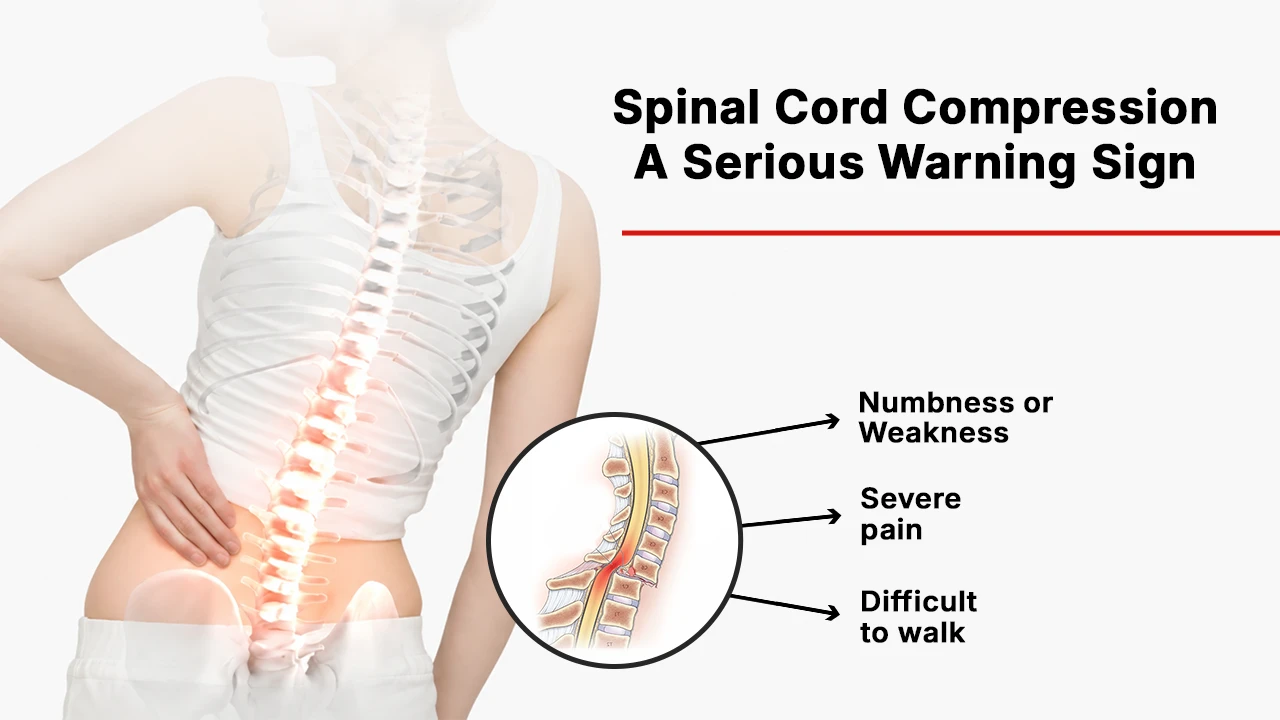
Spinal Cord Compression — A Serious Warning Sign
Of all back-related conditions, spinal cord compression is one of the most urgent. It occurs when the spinal cord or surrounding nerves are compressed by a herniated disc, bone spur, tumour, or spinal injury, disrupting the signals between the brain and the rest of the body.
Symptoms of Spinal Cord Compression
The symptoms of spinal cord compression can develop gradually or appear suddenly, and include:
- Persistent neck or back pain that worsens when lying down
- Weakness or heaviness in the arms or legs
- Numbness or tingling sensation below the site of compression
- Difficulty walking or maintaining balance
- Loss of bladder or bowel control is a medical emergency
Why It Cannot Be Ignored
Unlike general back pain, spinal cord compression does not resolve on its own. Without timely intervention, it can lead to permanent nerve damage or paralysis. If you experience any of the above symptoms, seek immediate medical attention from a spine specialist or neurosurgeon.
Spinal Stenosis — What You Need To Know
Spinal stenosis is a condition where the spinal canal narrows, placing pressure on the nerves travelling through it. It develops gradually, often over years, which is why many patients dismiss early warning signs as normal ageing.
Who Is Most at Risk?
Spinal stenosis is most commonly seen in adults over 50, though younger individuals with congenital spinal conditions can also be affected. Those with arthritis, previous spinal injuries, or a family history of spine problems carry a higher risk.
Spinal Stenosis Symptoms
Spinal stenosis symptoms often develop slowly and are frequently mistaken for general back pain or leg fatigue. The most telling sign is pain or cramping in the legs during walking that eases when sitting or bending forward, a pattern known as neurogenic claudication.
Other symptoms include numbness or weakness in the legs, reduced coordination, and, in advanced cases, loss of bladder or bowel control.
How Is It Treated?
Mild cases respond well to physiotherapy, pain management, and lifestyle changes. However, moderate to severe spinal stenosis often requires spine specialist intervention and, in some cases, surgical decompression by an experienced neurosurgery consultant.
Slipped Disc — Causes & Symptoms
A slipped disc, medically known as a herniated or prolapsed disc, occurs when the soft cushion between the vertebrae of the spine pushes out of place, pressing on nearby nerves. It is one of the most common causes of severe back pain and nerve-related symptoms.
What Causes a Slipped Disc?
Age-related wear and tear is the most frequent cause, as spinal discs lose water content and flexibility over time.
However, sudden heavy lifting, awkward twisting movements, and prolonged poor posture can trigger it at any age. Overweight individuals and those with physically demanding jobs are particularly vulnerable.
Slipped Disc Symptoms
Slipped disc symptoms vary depending on which part of the spine is affected. In the lower back, it typically causes sharp, radiating pain down one leg known as sciatica. In the neck region, pain radiates into the shoulder and arm. Patients often experience numbness, tingling, and progressive muscle weakness alongside the pain.
How Is It Different From General Back Pain?
Unlike muscular back pain that eases with rest, slipped disc pain often worsens at night, during coughing or sneezing, and with prolonged sitting. If symptoms persist beyond a few weeks or worsen rapidly, a consultation with a spine specialist is essential.
Warning Signs You Need a Spine Specialist
Many people tolerate back pain for months before seeking help. But certain warning signs should send you straight to a spine specialist, no delays.
Never Ignore These Red Flag Symptoms
- Pain that lasts more than 6 weeks and doesn't improve with rest or painkillers
- Severe back pain that wakes you up at night
- Pain radiating down one or both legs, especially below the knee
- Numbness or tingling in the legs, feet, or groin area
- Muscle weakness in the legs, making it difficult to walk or stand
- Loss of bladder or bowel control requires emergency attention immediately
- Back pain following a fall or accident, even if it seems minor
- Unexplained weight loss alongside persistent back pain
- Fever with back pain could indicate a spinal infection
Spine Specialist vs General Doctor
A general physician can manage mild back pain. But if your symptoms involve nerves, discs, or the spinal cord, a spine specialist with advanced diagnostic tools and surgical expertise is essential for accurate diagnosis and effective treatment.
Do You Need a Neurosurgeon for Back Pain?
Many patients are surprised to learn that a neurosurgeon for back pain is sometimes the most appropriate specialist to consult, not just for brain conditions. Neurosurgeons are highly trained in disorders of the entire nervous system, including the spinal cord and surrounding nerves.
When Does Back Pain Require a Neurosurgeon?
A neurosurgeon for back pain is typically recommended when:
- Conservative treatments like physiotherapy and medication have failed
- Imaging reveals significant spinal cord compression or severe disc herniation
- Slipped disc symptoms are causing progressive nerve damage
- Spinal stenosis symptoms are severely affecting the quality of life
- There is instability in the spinal structure requiring surgical correction
What To Expect at Your Consultation
Your neurosurgeon will review your MRI or CT scan, assess your neurological function, and recommend the least invasive treatment possible. Surgery is always the last resort, but when needed, early intervention by an experienced neurosurgeon prevents permanent nerve damage.
Neurosurgery vs Spine Specialist — What's The Difference?
A neurosurgery consultation is sometimes the most appropriate step, not just for brain conditions but for complex spinal disorders too. At Aditya Hospital, neurosurgery and spine care work hand in hand to deliver comprehensive treatment.

Conclusion
Back pain is common, but that doesn't mean it should be ignored. From understanding back pain causes to recognising symptoms of spinal cord compression and slipped disc symptoms, early awareness is your best defence against long-term damage.
Key Takeaways
- Most back pain is treatable when caught early
- Women should pay attention to what causes lower back pain in females, as triggers differ
- Severe back pain, radiating leg pain, or loss of bladder control requires immediate attention
- A spine specialist or neurosurgeon for back pain can prevent permanent nerve damage
Don't Wait Until It Gets Worse
The longer spinal conditions go untreated, the more complex they become. If you recognise any warning signs discussed in this blog, act now.
Consult Our Spine Specialists at Aditya Hospital, Rewari
Our experienced team of spine specialists and neurosurgeons are here to diagnose, treat, and guide your recovery.
Frequently Asked Questions
Q1. What are the most common causes of back pain?
The most frequent back pain causes include poor posture, muscle strain, herniated or slipped discs, arthritis, and a sedentary lifestyle. In women, hormonal factors and gynaecological conditions like endometriosis can also contribute significantly.
Q2. What causes lower back pain specifically in females?
What causes lower back pain in females is often linked to hormonal fluctuations during menstruation, pregnancy, or menopause. Conditions like endometriosis, PCOS, and uterine fibroids are also common but frequently misdiagnosed as musculoskeletal back pain.
Q3. What are the warning signs of spinal cord compression?
Symptoms of spinal cord compression include persistent back or neck pain, weakness or numbness in the limbs, difficulty walking, and, in severe cases, loss of bladder or bowel control. These symptoms require urgent medical attention and should never be ignored.
Q4. When should I see a spine specialist for back pain?
You should consult a spine specialist if your back pain lasts more than 6 weeks, radiates down your legs, causes numbness or weakness, or is accompanied by fever or unexplained weight loss. Early consultation prevents conditions from worsening.
Q5. Do I need a neurosurgeon for back pain?
Not always, but a neurosurgeon for back pain is recommended when conservative treatments have failed, or when imaging reveals significant spinal cord compression, severe disc herniation, or structural spinal instability. A neurosurgeon ensures the most precise surgical care when needed.


