


Your spine is one of the hardest-working structures in your body, yet it often receives little attention until pain appears. Many people unknowingly develop everyday habits that hurt their spine, only noticing the problem when lower back pain, neck stiffness, or discomfort between the shoulders begins to affect their daily life.
Because these problems usually develop gradually, they are often dismissed as tiredness, ageing, or the result of a busy day. However, recurring pain or stiffness can sometimes be a sign that these are the everyday habits that hurt your spine.
The good news is that many of these habits can be identified and corrected early. Making small changes to your everyday habits that hurt your spine can protect your spine health and prevent turning minor discomfort into a long-term problem.
Why Your Everyday Habits Matter More Than You Think:
Your spine is the central support structure of your body. It helps you maintain posture, protects the spinal cord and nervous system, and supports almost every movement you make. Because it plays a role in nearly every daily activity, even small repetitive stresses can gradually affect its health and function.
The spine can adapt to occasional strain, but repeated unhealthy habits can gradually put extra stress on its muscles, joints, and supporting structures.
Here are seven everyday habits that hurt your spine and are often overlooked causes of back pain and neck discomfort.
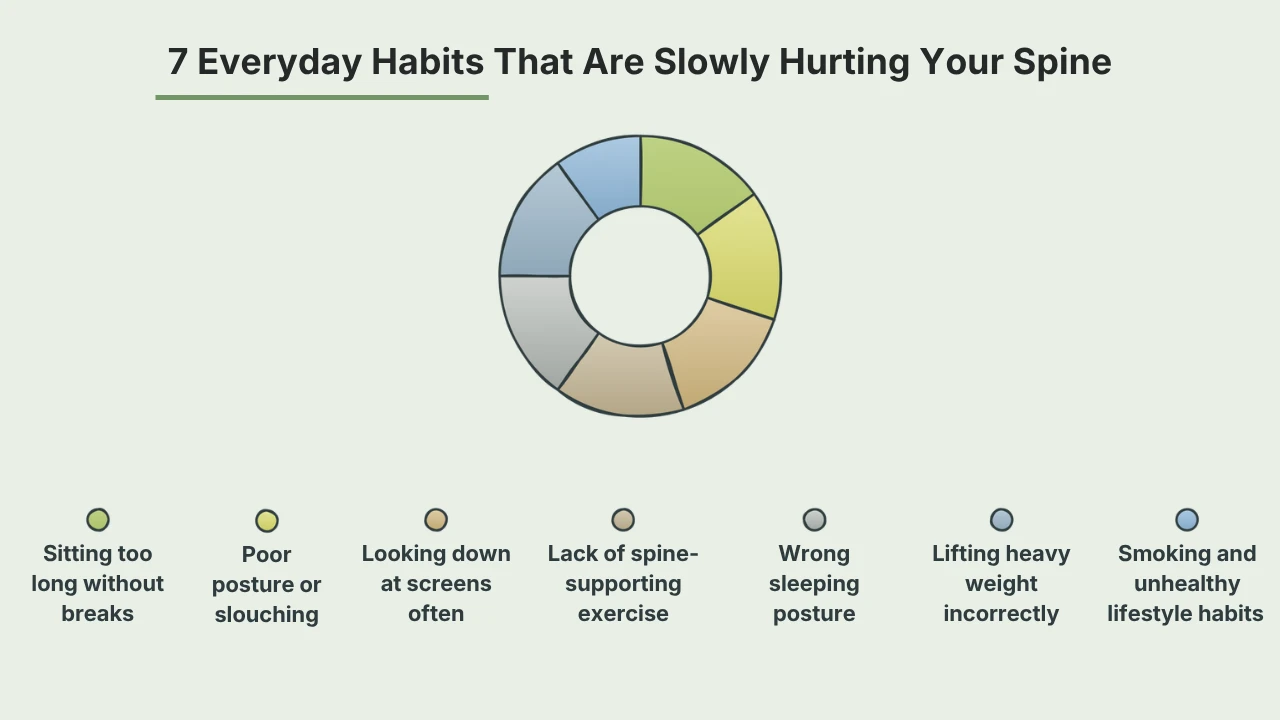
7 Everyday Habits That Are Slowly Hurting Your Spine
Sitting for Long Hours Without Taking Movement Breaks
Whether you're working at a desk, driving for long hours, or spending hours in front of a screen, sitting in one position for extended periods can put extra pressure on your lower back. Staying still for too long can also cause muscles to tighten and reduce flexibility. These are the most common everyday habits that hurt your spine.
Over time, you may begin to notice lower back pain, stiffness when standing up, or discomfort after prolonged sitting. Taking short movement breaks, walking around, and stretching regularly can help reduce unnecessary stress on your spine.
Slouching and Maintaining Poor Posture
Leaning forward while working, sitting with rounded shoulders, or standing with poor posture may seem harmless, but these habits can place additional strain on the muscles and supporting structures of the spine, contributing to poor posture and recurring back pain.
Poor posture also forces certain muscles to work harder than they should, leading to fatigue and discomfort.
Over time, this can contribute to neck pain, upper back pain, headaches, and muscle stiffness. Maintaining a neutral spine, keeping your shoulders relaxed, and avoiding the same posture for long periods can make a noticeable difference.
Spending Too Much Time Looking Down at Screens
Many people spend several hours a day looking at their phones, laptops, and tablets. Constantly bending your neck forward to look at a screen can place extra stress on the cervical spine, a condition often referred to as 'text neck'. This is the most common unknown everyday habits that hurt your spine.
This may lead to neck pain, stiffness, headaches, and discomfort around the shoulders. Raising your screen closer to eye level, taking regular breaks, and gently stretching your neck can help reduce strain and improve comfort.
Not Exercising Enough to Support Your Spine
Your spine is designed to move, not remain in one position all day. When you don't exercise or stay physically active, the muscles that support your spine can gradually weaken, making everyday movements more demanding on your back.
Recurring back pain, stiffness, and reduced mobility are common signs of an inactive lifestyle. Regular walking, stretching, and exercises that improve strength and flexibility can go a long way in supporting spinal health.
Sleeping in Positions That Strain Your Neck and Back
Your spine needs proper support during sleep to recover from the stresses of the day. Sleeping in awkward positions, using unsuitable pillows, or resting on an unsupportive mattress can contribute to neck and back discomfort.
Many people wake up with a stiff neck, lower back pain, or soreness that gradually improves as the day progresses. Sleeping in a position that keeps your spine aligned and using appropriate support can help reduce morning stiffness and improve overall comfort.
Carrying and Lifting Heavy Loads Incorrectly
Whether it's carrying heavy bags, lifting luggage, moving household items, or handling loads at work, incorrect lifting techniques can place sudden strain on your back. Repeatedly carrying a heavy weight on one shoulder can also create muscle imbalances and place uneven stress on the spine.
This may result in lower back pain, muscle strain, or discomfort that worsens with movement. Developing proper lifting habits, such as bending your knees, keeping the load close to your body, and avoiding uneven weight distribution, can significantly reduce the strain placed on your spine.
Smoking and Other Lifestyle Choices That Affect Spine Health
Many people associate smoking with lung and heart problems, but it can also affect spine health. Smoking may reduce blood supply to spinal structures and interfere with the body's natural healing processes.
Similarly, poor nutrition, excess weight, and unmanaged stress can contribute to recurring back and neck discomfort. But smoking is the worst everyday habits that hurt your spine among all habits.
Over time, these factors may lead to persistent pain, slower recovery from strain, and increased stiffness. Small lifestyle changes, such as choosing nutritious foods, staying active, managing stress, and quitting smoking, can help create a stronger foundation for long-term spine health.
Simple Everyday Changes That Can Help Protect Your Spine
If you're wondering how to keep your spine healthy, these spine health tips can help you reduce everyday strain, support long-term spinal health and improve the everyday habits that hurt your spine.
Improve Your Sitting and Working Posture
The way you sit and work throughout the day has a direct impact on your spine. Try to sit with your back supported, keep your shoulders relaxed, and place both feet flat on the floor. If you spend long hours at a desk, keeping your screen at eye level and using proper back support can help maintain a more neutral spine position and reduce everyday strain.
Keep Your Body Moving Throughout the Day
The human body is designed to move. Simple habits such as standing up every 30 to 45 minutes, taking short walks, stretching, or changing your position regularly can improve flexibility and reduce stiffness. Small movement breaks throughout the day can make a noticeable difference to your spine health.
Build Strength and Flexibility
Strong muscles help support the spine and improve posture, while flexibility allows your body to move more efficiently. Regular walking, gentle stretching, and yoga for spine health can improve stability and mobility, especially when combined with core-strengthening exercises. Staying consistent is enough to support long-term spine health.
Create a Spine-Friendly Sleep Routine
Your spine continues to recover while you sleep, which makes your sleeping habits just as important as your daytime activities. Try to sleep in a position that keeps your neck and back aligned. Many people also find relief by placing a pillow under their knees while sleeping on their back or between their knees while sleeping on their side.
Maintain Healthy Lifestyle Habits
Your everyday choices can influence your spine health more than you may realise. Building simple habits such as eating a balanced diet, choosing nutrient-rich foods for spine health, maintaining a healthy weight, staying physically active, and managing stress can support your overall well-being and become one of the most effective ways to protect your spine.
Warning Signs Your Spine Needs Attention
Your body often gives subtle signs when your spine is under stress. While occasional aches and stiffness can happen after a long day, recurring symptoms should not be ignored. Pay attention if you notice any of the following:
- Your lower back hurts after sitting for long periods and takes time to feel normal again.
- You frequently wake up with neck stiffness, back pain, or soreness that improves only after moving around.
- Your pain keeps coming back even after rest, stretching, or temporary relief from pain sprays and massages.
- You experience tingling, numbness, or weakness in your arms or legs, especially if the symptoms are becoming more frequent.
- Everyday activities such as sitting, walking, bending, lifting, or climbing stairs are becoming uncomfortable or difficult.
These symptoms do not always indicate a serious spine condition. However, if they persist or begin to interfere with your daily life, it may be a sign that your spine needs attention.

When Should You Consult a Spine Specialist?
If your pain keeps returning, is getting worse, or is limiting your comfort and mobility, it may be time to seek professional advice by consulting a spine specialist for an accurate diagnosis and treatment instead of continuing to ignore the symptoms.
Your Pain Persists Despite Rest and Lifestyle Changes
If back or neck pain continues even after taking rest or basic care, it should not be ignored. To understand different types and causes of pain, you can read more about back pain causes and symptoms.
Simple Activities Are Becoming Difficult or Painful
When everyday movements such as bending, sitting for short periods, walking, or lifting light objects start causing discomfort, it may be a sign that your spine needs attention. These changes often develop gradually and should not be overlooked.
You Experience Tingling, Numbness, or Weakness in Your Arms or Legs
Symptoms such as tingling, numbness, or weakness in the arms or legs can sometimes indicate nerve involvement. These signs should be taken seriously, especially if they are recurring or becoming more noticeable over time.
Your Pain Is Becoming More Frequent or Severe
If symptoms continue to persist, seeking an evaluation from a spine department can help determine the underlying reason for your pain. Early consultation can help identify the issue and prevent it from worsening further.
Key Takeaway: Small Habits Have a Big Impact on Spine Health
Small habits can have a significant impact on your spine health, both positive and negative. Spine-related pain rarely develops overnight and often builds gradually due to poor posture, long sitting hours, lack of movement, incorrect lifting, and other lifestyle patterns that place repeated stress on the spine.
The good part is that small, consistent changes in your daily routine can make a noticeable difference. Improving posture, staying active, sleeping better, and being mindful of your movements can all help with back pain prevention and reduce unnecessary strain on your spine over time.
However, if your pain keeps returning or symptoms continue to persist, it is always better to seek professional advice. At Aditya Super Speciality Hospital, patients receive specialised care for accurate diagnosis and effective management of spine-related conditions.
Frequently Asked Questions
Q1. Why Does My Back Hurt After Sitting for Long Periods?
Sitting for long periods can place extra pressure on your lower back and cause stiffness in the muscles that support your spine. This can lead to discomfort when you stand up or start moving again. Taking regular movement breaks and maintaining proper posture can help reduce recurring back pain.
Q2.Can Correcting Your Posture Help Reduce Back and Neck Pain?
Yes, improving posture can significantly reduce strain on your spine. Sitting and standing with proper alignment helps distribute body weight evenly and reduces pressure on the neck, upper back, and lower back. Over time, this can help reduce pain and prevent it from returning.
Q3. Is Back Pain a Normal Part of Ageing?
Back pain is not always a normal part of ageing. While age-related changes can affect the spine, most back pain is linked to lifestyle habits such as inactivity, poor posture, or muscle weakness. With the right care and habits, spine-related discomfort can often be managed or reduced.
Q4. Can Diet and Nutrition Affect Spine Health?
Yes, diet and nutrition play an important role in spine health. Nutrient-rich foods containing calcium, vitamin D, protein, and magnesium help support strong bones and muscles, while maintaining a healthy weight can reduce unnecessary stress on the spine.
Q5. Are All Spine Problems Treated With Surgery?
No, surgery is not required for most spine problems. Many conditions improve with non-surgical treatments such as physiotherapy, lifestyle changes, exercise, posture correction, and medication when needed. Surgery is usually considered only in specific or severe cases.
Q6. When Should You Consult a Spine Specialist for Back Pain?
Back pain should be evaluated by a spine specialist if it keeps returning, becomes more severe, or does not improve with rest and basic care. It is also important to seek medical advice if you experience symptoms such as tingling, numbness, weakness, or difficulty performing routine movements.


